
What is SERF2?
SERF2 is a tiny protein that plays an outsized role in keeping cells healthy. It helps control protein homeostasis — the cell’s ability to keep proteins correctly folded. When this mechanism breaks down, damaged proteins build up, driving aging and disease.
Why It Matters
Drives harmful protein clumping. SERF2 accelerates the amyloid buildup seen in neurodegenerative diseases like Huntington’s, Parkinson’s, and Alzheimer’s disease, making it a promising drug target.
Involvement in protein disposal. It also affects how cells clear out damaged proteins.
Builds stress granules. Under stress, SERF2 supports the formation of stalled mRNAs and RNA-binding proteins, pausing protein synthesis.
Linked to more than the brain. New research ties SERF2 to other age-related disease like cardiovascular disease and cancer.
The Immune Connection
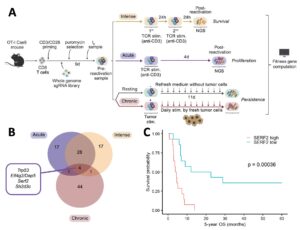
In an earlier genetic screening, we found that SERF2 limits the fitness of CD8+ T cells — the immune cells that kill infected or cancerous cells — across many types of stimulation. In cancer patients treated with Tumor-Infiltrating Lymphocyte (TIL) therapy, those whose transferred T cells had low SERF2 expression lived significantly longer.
Multimodal function-based genome-wide CRISPR knockout screens for genes contributing to T cell fitness upon differential stimulation. A T cell stimulation screens setup and B Overlapping hit analysis. C Kaplan-Meier OS curves of patients receiving TIL therapy with top and bottom third highest and lowest SERF2 expression in TIL products [Lin et al., Cancer Cell 2024].
What Happens Without SERF2
Removing SERF2 from T cells makes them:
Survive and multiply better, resisting the cell death normally triggered by strong activation
Resist chronic stimulation by cancer cells more effectively in different antigen-T cell receptor combinations
Shift to a more efficient energy metabolism (oxidative phosphorylation), which is linked to longer-lasting, less “exhausted” immune cells
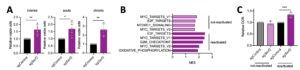
Phenotypic characterization of Serf2-KO in murine CD8 T cells. A Viable cell number under indicated stimulation conditions. B Transcriptomic profiling and gene set enrichment analysis of indicated T cells with/without anti-CD3 stimulation. C Metabolic activity (oxygen consumption rate, OCR) under indicated stimulation conditions.
We also engineered SERF2-deficient CAR T cells (targeting CD19, a marker expressed on B cell malignancies) and found that they killed cancer cells substantially better than standard CAR T cells, without alterations in other effector functions.
What’s Next
Our ongoing work aims to:
Further characterize how SERF2 loss reshapes T cell metabolism and resistance to exhaustion
Uncover the mechanism and test whether involvement of stress granule formation explains the effect of decelerated cellular aging
Confirm benefits in murine cancer models
Analyze large patient datasets to link SERF2 expression to real-world immunotherapy outcomes
The Big Picture
SERF2 may be a key link between protein quality control, immune cell aging, and cancer-fighting power — offering a new path toward more durable, effective cancer immunotherapies by modifying aging processes of immune cells.
Principle Investigators
· Dr. Astrid Alflen, Department of Hematology and Medical Oncology, University Medicine Mainz (person of contact email)
· Prof. Dr. Johannes Mayer, Department of Dermatology, University Medicine Mainz
· Prof. Dr. Dorothee Dormann, Faculty of Biology, JGU Mainz
